Category: Politics

  • Legal Corporate Personhood

    If you had the power to change one law, what would it be and why?

    Ok, this is a thinker, and I had to research this some. I’m not a lawyer or work in law, so I hope that this makes sense.

    I would change the concept of Legal or Juridical Personhood. It is a legal concept that’s the foundation of a number of laws in different countries, including the 14th Amendment in the US. By law, corporations, non government organizations, colleges, hospitals, churches, and really any non human entity like rivers can be granted Personhood if it has certain qualities like paying taxes and owning property. It’s a concept that seems to exist in business, government, and the judiciary.

    It’s by law a fictional type of person. But this concept has powers that real persons do not, like surviving the deaths of owners and corporate members, and since many of these corporations ( not all) focus on profit and property, they often have more resources than real working people do. So they do have more power and resources than the ordinary person does.

    They can hire lobbyists to influence government, invest more in political ads on different media, donate to candidates in their favor , have the resources to hire top lawyers, own much more property than the average person, have better access to bank loans and political deals, and sometimes be a monopoly in a certain business.

    It just seems unfair to have the needs of fictional abstract “persons” to often take priority over real persons. So I would change that part of the law. Corporations are organizations with certain mechanisms that help with a goal, like making profit, or accomplishing a mission like healthcare. They are the legal equivalent of a bot. ~H
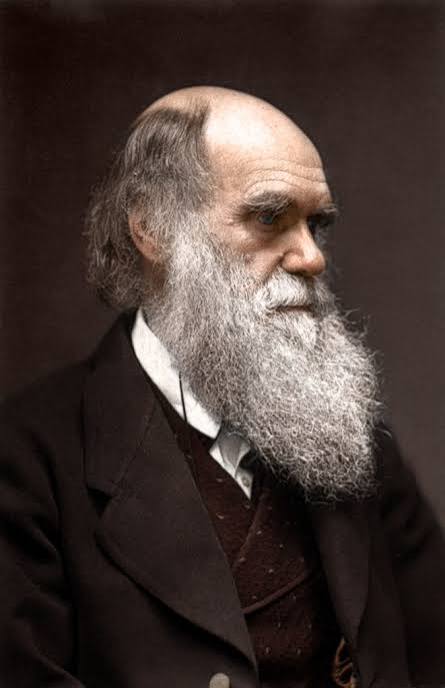
  • 13 of the World’s Greatest Thinkers

    13 of the World’s Greatest Thinkers

    Throughout world history, numerous intellectuals have profoundly shaped human thought, culture, and progress.

    Here’s a list of some of the greatest intellectuals whose ideas and discoveries continue to influence us today:

    – **Socrates (470–399 BCE)** — The classical Greek philosopher who laid the groundwork for Western philosophy through his method of questioning and dialogue.

    – **Plato (427–347 BCE)** — A student of Socrates, Plato founded the Academy and contributed foundational ideas in philosophy, politics, and metaphysics.

    – **Aristotle (384–322 BCE)** — A polymath who made lasting contributions to logic, science, ethics, and political theory.

    – **Leonardo da Vinci (1452–1519)** — The quintessential Renaissance man, da Vinci excelled as an artist, scientist, engineer, and inventor.

    – **Confucius (551–479 BCE):** Chinese philosopher whose teachings on morality, society, and governance deeply influenced East Asian cultures.

    – **Isaac Newton (1643–1727)** — His laws of motion and universal gravitation became cornerstones of physics and scientific inquiry.

    – **Immanuel Kant (1724–1804)** — A central figure in modern philosophy, known for his work on epistemology, ethics, and metaphysics.

    – **Charles Darwin (1809–1882)** — Revolutionized biology with his theory of evolution by natural selection.

    – **Marie Curie (1867–1934)** — Pioneering physicist and chemist, the first woman to win a Nobel Prize, known for her work on radioactivity.

    – **Albert Einstein (1879–1955)** — His theories of relativity transformed our understanding of space, time, and energy.

    – **Noam Chomsky (b. 1928)** — A linguist, philosopher, and political activist recognized for his groundbreaking work in linguistics and cognitive science.

    – **Sigmund Freud (1856–1939):** Founder of psychoanalysis, offering new insights into the human mind and behavior.

    – **Jane Austen (1775–1817):** Novelist whose keen observations of social structures and human nature have resonated across centuries.

    This list is by no means exhaustive, but each of these intellectuals has played a critical role in expanding the horizons of human knowledge and shaping the intellectual landscape of their times and beyond. ~H

  • How People Survived Fascism

    Survivors of fascism have endured profound and often harrowing experiences under regimes characterized by authoritarian control, suppression of dissent, and widespread human rights abuses. Their stories reveal the devastating impact of fascist rule on individuals and communities, as well as the resilience and courage required to endure and resist.

    Many survivors recount living in constant fear due to pervasive surveillance, arbitrary arrests, and brutal punishments for any perceived opposition.

    Families were frequently torn apart, with loved ones imprisoned, exiled, or worse.

    Daily life under fascism often involved restrictions on freedom of speech, assembly, and press, making it dangerous to express any dissenting opinions.

    Experiences also include witnessing or surviving targeted violence against marginalized groups, including ethnic minorities, political opponents, and other vulnerable populations.

    Forced labor, internment in concentration camps, and systematic persecution were tragically common.

    Despite these hardships, survivors’ testimonies often highlight acts of solidarity, resistance, and hope. Many participated in underground movements, helped hide those persecuted, or found ways to maintain their dignity and humanity in the face of oppression.

    These firsthand accounts are invaluable for understanding the human cost of fascism and serve as powerful reminders of the importance of vigilance against tyranny and the defense of democratic values.

    Organizations and memorial projects around the world work to preserve these stories, ensuring that the lessons of the past inform our present and future.

  • Fascist Regimes in History

    Fascism is a political ideology characterized by authoritarianism, nationalism, and often a dictatorial leadership. Throughout history, several regimes have been identified as fascist or exhibiting fascist characteristics.

    Here are some of the most well-known fascist regimes:

    – **Italy under Benito Mussolini (1922–1943):** Often considered the original fascist regime, Mussolini’s government emphasized nationalism, militarism, and the suppression of political opposition.

    – **Germany under Adolf Hitler (Nazi Party) (1933–1945):** The Nazi regime combined fascist ideology with extreme racism and anti-Semitism, leading to World War II and the Holocaust.

    – **Spain under Francisco Franco (1939–1975):** While Franco’s regime is sometimes described as authoritarian or nationalist, it shared many characteristics with fascism, including centralized control and suppression of dissent.

    – **Portugal under António de Oliveira Salazar (Estado Novo) (1932–1968):** Salazar’s regime was authoritarian and nationalist with some fascist elements, emphasizing traditional values and anti-communism.

    – **Hungary under Miklós Horthy and the Arrow Cross Party (early 1920s–1945):** Horthy’s regime leaned authoritarian, and the later Arrow Cross Party (1944–1945) was explicitly fascist and aligned with Nazi Germany.

    – **Romania under Ion Antonescu (1940–1944):** A military dictator who allied with Nazi Germany and led a government with fascist policies.

    – **Japan (1930s–1945):** While Japan’s government was militaristic and authoritarian during this period, it didn’t fully adopt Western-style fascism but shared similarities in nationalism and expansionism.

    These regimes varied in their specific policies and implementations but shared core elements of fascism such as authoritarian rule, nationalism, and the suppression of opposition.

    It’s important to note that the term “fascism” can be complex and interpretations vary among historians. Some regimes exhibit fascist traits without fully fitting the definition. Each regime had unique features shaped by their own historical and cultural contexts. ~H

  • College instead of Military

    What could you do differently?

    This is the choice I had as a senior in high school back in 1991, about to graduate and make my own way in the world. My dad died when I was 11, so my mother worked a lot trying to support my 2 brothers and I. Since it was a struggle to support the family on a single income, my mother gave me the choice of either joining the military, where I could learn a job skill or several through apprenticeships, or stay with my mom and brothers, and go to college for a formal education while she paid for my tuition and books. Maybe I could work a job to help with the fees.

    I had my reasons to join the military after high school graduation, one of them being that I didn’t want to burden my mother with the extra expenses of school. Learning a job skill, seeing the world, maybe toughening up some since I was a gawky nerd while in public school. I was very green, naive, and sheltered. But I would qualify for the Montgomery GI Bill, if I joined the military. I could go to college later, if I chose so. (I did, 10 years later.)

    Was the Air Force a good experience? Yes, and no. I met some good people, did go to different parts of the US and some other countries, learned how to be a professional military cook and basic service specialist, learned some military culture and lingo, and didn’t screw up so much that I was able to get an honorable discharge after 2 terms of service. It was sometimes stressful, sometimes loud enough that I developed tinnitus from the noise of war machinery, and I had to cope with the politics (workplace and geopolitical). I also developed habits like smoking and the occasional binge drinking, and I became more jaded and vigilant. I wasn’t burned out yet, but I lost a spark I had at 18.

    I started to go college when I was 27, sometimes older than the other students. While I did study and did well enough in some courses, there was some other courses I couldn’t keep up with, or in some cases was completely lost. Astrophysics 2 showed that I’m terrible in advanced math, and intermediate algebra seems to be my limit.

    I got so burnt out from reading college textbooks that I don’t have the attention span for reading books anymore. I’ll read online summaries or specific quotes or facts about a topic instead. I ended up dropping out of getting a bachelors degree partly cuz my grades weren’t good enough (with autistic spikes), and I couldn’t afford to finish college.

    So why would I chose college over the military after highschool? Money, time, and energy. I was more energetic, healthy, and idealistic at 17-18 years old than I was at 27-28, college was cheaper (yet still costly), and I would spend more time with my family. I would probably have a better formal education than I do now, maybe working as an engineer or professional writer. I also probably wouldn’t have developed the wanderlust I have for travel if I just stayed in my hometown, instead of the 7 countries I was able to visit while in the military.

    I’m not sure if it was a better choice, but maybe I would have chosen a different fork in the road knowing what I know now.

  • Despair and cynicism

    How have your political views changed over time?

    There’s a good reason why some voters/people become independent or apolitical over time. I found that out in recent years.

    I lost hope, and I don’t think any solutions are possible through politics. Only periods of time when the system is more stable and functional. Corruption runs deep in several countries, and can ruin any halfway decent functional government and nation.

    There is no perfect political or economic system, only less bad ones, so I’m country hopping to find a suitable country that is a better fit for me. I lean more progressive/Social Democrat in the US. I left the US last January, so I’ve been exposed to different systems and cultures over the past year. I may not return to the US, if I can help it.

    Yes, I’ve become more depressed and cynical at my age. Interesting times indeed.