Category: Wisdom

  • 1997!

    If you could relive one year of your life, which one would it be?

    So I have been thinking about my past, and there has been years I don’t want to do over again, but there were bright spots in those years. Otherwise, I probably wouldn’t be alive to be answer this prompt. 1985, 1991, 2009, 2015, and 2020. 2020 should be obvious why it was a bad year, although I did take a 12 day fun trip to Las Vegas and I didn’t get COVID.

    There are years I do want to relive, even though work stress and lack of a romantic relationship were common themes. 1994, 2008, 2012, 2017, and last year were good years relatively. There was still crappy moments, but enough was going on where I could cope well enough. I did have relationships and was in a better mood.

    I think I should single out 1997 though. I was 23-24 years old, was in the United States Air Force, and was stationed in the United Kingdom for over 2 years. Some Americans are lucky to be able to afford to spend a week vacation in the UK, but I was very lucky to be in the country long enough to go to London several times. And from 1996 to 1998 was one of the best times to be in the UK and London. And I was young enough to enjoy it.

    London is one of the best cities for nightlife, and I was able to go to London once or twice a month for the weekends. BritPop, UK Speed Garage, and French House music were popular in the country at the time. I went to dance clubs and concert venues to see the local acts. Not huge international performers, but big enough bands and performers that played on BBC Radio regularly. Most times I went alone, but other times with coworkers and I had fun.
    I did see some of the famous landmarks while in London. I wish that I had a better camera back then to be able to take photos, but at least I saw Big Ben, Westminster Abbey, Buckingham Palace, The Tower of London, and the Riverwalk near Thames. London as a city has one of the richest cultures and histories.

    I drank the local pints at pubs, and I got into Stout beers like Guinness and Beamish. I still like those beers, and I have them when they are available, and I can afford them. Maybe it’s not a good thing to have been drinking more heavily, but don’t regret it.

    More importantly, I had friends. Most of the friends I did have were military and civilian coworkers at the dining hall I mostly worked at on base. But we worked well together, and we would hang out at times after work. Sometimes to rent videos to watch together, or play video games. Austin Powers was released around that time, and we enjoyed that and even understood some of the references specific to British culture.
    It’s strange that I mostly hanged out with women, but they were good people.

    Oh, it gets better! Cuz I also had temporary duty in other countries like Denmark and Spain. The deployments were mostly NATO training exercises for one or two weeks, but I appreciated going to other countries that I probably wouldn’t be able to afford to go to otherwise.

    So last year, I had a layover at a London airport after spending over 3 months in Tirana Albania. It was for 8 hours, and I was very tempted skip the next flight to spend 3 days there to enjoy the nightlife and see how the country changed over 30 years. I decided against it cuz of cost, but I hope to be able to afford to go to London again. Even if it’s for 2 days or so.

  • I Watch Less TV and Cable Now.

    I Watch Less TV and Cable Now.

    What’s something you do completely differently from how you were raised?

    This is probably the biggest difference in my life now. Growing up in the 70s and 80s, I lived in a 2 television household. One TV was a smaller portable black and white television that I often watched in the kitchen or in my bedroom with my 2 brothers. The other color television stayed in the living room. It was too heavy for my brothers and I to carry it. Indeed, the television likely required 2 people to carry the television, or one very fit person with a strong back.

    So growing up, I watched a lot of TV shows and sometimes syndicated movies on broadcast networks. I saw some of the classic series over the years, and then some shows that may last one or 2 seasons.

    My family also invested in premium cable television and later a VCR device and video game consoles. Atari, HBO, and a Nintendo console. Even more time in front of the television. Probably a good fraction of my life was in front of the TV watching some of the theatrical movies, some made for cable series, playing the early more primitive video games. I was entertained enough back then.

    I still love some shows, like I’m still a big Simpsons fan. But over the past 10 years, I started to drift away from watching so much television.

    Maybe streaming services have a lot to do with that, having a laptop and smartphone changed my viewing habits even more. I replaced one screen for another.

    I don’t know exactly why my viewing habits changed. I think I became wiser and more experienced, and became more familiar with the tropes and cliches of TV series. Like I can’t really tolerate laugh tracks on sitcoms any more, cuz some of the jokes on shows aren’t that funny. Other times, television shows like dramas reference real life events, such as real life crimes. I can read about the unsanitized real life events online instead.

    But also maybe I spent too many days coming home from work or school, and ended up watching television or playing video games alone for hours. Not always, cuz I will still watch television with others, but it’s often sport games or a show or movie I’m not that invested in. I think my attention span dwindled over time. I have other interests now.

    So TL;DR version. I grew up in a 2 TV set household watching a lot of television and I eventually drifted away from that to the point where I barely watch any TV or cable programs. I’ll read online articles, go on social media, or play more simple video games on my smartphone.

  • A Lucky Find (Part 2)

    A Lucky Find (Part 2)

    What’s the best thing you’ve ever found randomly on the street?

    Sometimes I find money in the street, but it doesn’t happen as often as I’d like. I already wrote an essay/ short story about a time I found 50$ decades ago and was able to afford to go to a state fair. But there’s been other incidents where I was lucky and found money.

    Around 2011, I was working a different part time job as a dishwasher and still struggling (I was fired from that telemarketing pledge job in 2004 after 3 months), I was riding my bicycle at night from work  and again found money. This time 30$ laying in the grass. A 20$ and a 10$ , not in a wallet. Again, I picked it up cuz I desperately needed it. I spent that 30$ on food and the cheapest brand of cigarettes I could get. I was grateful at the time.

    But another incident was when I was more stable living on disability pensions and took a solo trip to Las Vegas. I was more comfortable, and had more leeway with my spending. It was my second time in Las Vegas, and I went in 2020 during the COVID pandemic.

    I actually didn’t gamble much during my 2 trips to Las Vegas. Maybe 125$ total, but between the 2 trips I won over 400$ playing penny slots. I take risks, but relatively low risks. I was grateful to have won money at all.

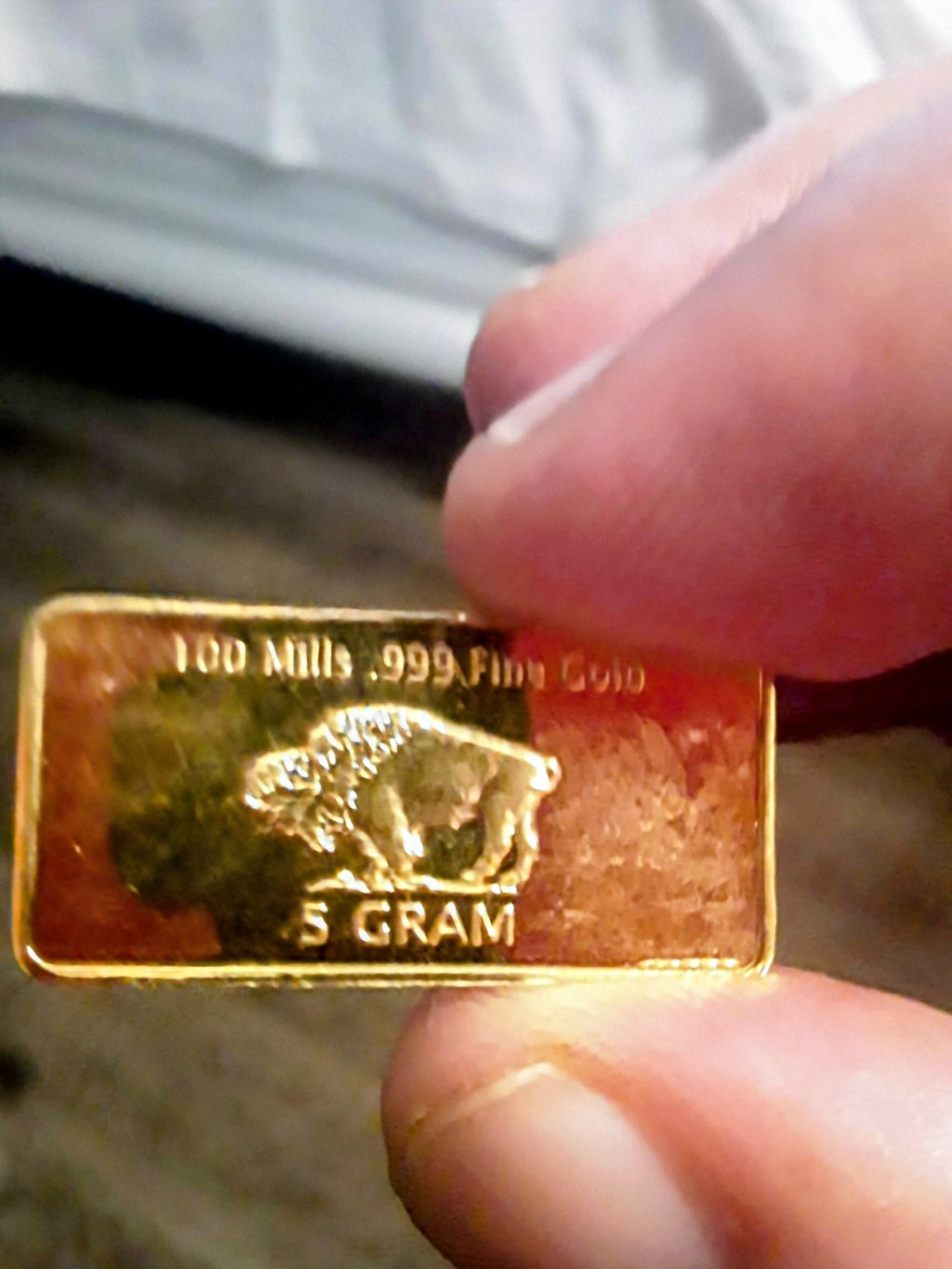
    Anyways, I was walking back from a convenience store, and saw a small object shining in the sun. Curious, I stopped and looked closer. It appears to be a coin of some type in a small transparent plastic case. I picked it up. It looked like a small gold bullion with an imprinted buffalo and some printing. Huh.

    It took me a month of online research to find out what it was. It’s not solid or 24 carat gold, but rather a gold plated copper bullion. Not much gold, not worth much money. Maybe worth 6 or 7$. It contains roughly 5 milligrams of 24 carat gold.

    I still have it, cuz it’s not really worth much. However, if I get really desperate again, I could try to sell it. It did take me a month of online research to identify the coin and it’s actual value. If I was desperate enough to be shady, and could find a specific kind of buyer……..🤔

  • My Talk Therapist Pulled Through

    What’s the kindest thing someone has ever done for you?

    I really had to think about this prompt, cuz acts of kindness towards me seem to be rare, or at least hard to recall outside of my own family. But I’m a disabled US veteran, and I needed help back in 2011. I was able to get it at a VA hospital thanks to the medical staff.

    So back in 2011, I was in bad shape, but I didn’t want to admit it. I wanted to “pull myself by my own bootstraps” even though I was underemployed, had student loan debt I was afraid that I couldn’t repay without great difficulty, had and currently have severe depression and a good level of anxiety.

    I smoke heavily, toked and drank with what little money I had. I had to be hospitalized for mental health issues once before, and I didn’t want to be hospitalized again. I’ll figure it out, I thought, even though I was homeless again. I couldn’t make rent for a studio apartment.

    I ended up at a veterans group home, and I started to see a psychologist I’ll call Dr. Sandra. Her first name, but I’ll withhold her last name. A blonde middle aged woman. Over time, I would talk through my problems. I had a lot. I sometimes was harassed and bullied at work and school. I had deaths in the family. I struggled to find and keep jobs, after my time in the service. I have physical, psychological, and it later turned out neurological disabilities.

    I found out that I’m neurodiverse, but the medical staff didn’t notice it until I gradually noticed patterns, did some reading, and brought it up to the doctors. After group therapy sessions and medical tests, it turns out that I had several diagnoses, including hearing impairment and a type of autism.

    Anyways, Dr. Sandra encouraged me to file for disability benefits, she listened to what I had to say and offered advice to problems I had, and she taught group sessions with other veterans that gave better life skills than what I had before. I had to file a appeals claim after my disability case was denied the first time, and she wrote a letter to social security administration listing the various disabilities I’ve had, and why I can’t work full time anymore.

    I was approved for disability pensions. A modest income, but it is more than my income during my working life. Yes, even more than when I was active duty. I’m grateful that I met Dr. Sandra, and she gave me help and a listening ear for when I needed it.

    Do I still have problems and worries? Oh yes. But I’m able to cope better, I volunteer, donate, and help people when I can, and I have better problem solving abilities than before. And I have changed over time. I’m not as passive as I tried to be before, but I have learned that it’s ok to walk away if some issue is stressing me out. It’s ok to quit a job or school due to stress, end a toxic relationship, and failure can make one think of alternatives if something isn’t working out.

    I also read some books that Dr. Sandra recommended, and I got into the current version of the BBC show Sherlock because she is a fan. Which I actually liked.

    I have a better life now, thanks to the medical staff at the Veterans Administration hospital and Dr. Sandra.

  • Retirement

    If the salary was the same, what job would you be doing right now and why?

    Retirement. Why work if you don’t have to? You can do what you want. Sleep 14 hours a day even. There’s gonna be more automation in the future, so it’s gonna be harder to find good paying jobs.

    However, if I had to work, I’d choose sex worker. Legalized and decriminalized, of course. And women only. That’s a sweet deal.

  • The Dead Artist Club: 11 Iconic Artists

    The Dead Artist Club: 11 Iconic Artists

    “The Dead Artist Club” is a playful or informal term sometimes used to refer to famous artists who have passed away but whose work continues to inspire and influence the art world. Here’s a list of some iconic members of this “club”:

    – **Leonardo da Vinci (1452–1519)** – Renaissance master known for the Mona Lisa and The Last Supper.

    – **Vincent van Gogh (1853–1890)** – Post-Impressionist known for Starry Night and his vibrant use of color.

    – **Frida Kahlo (1907–1954)** – Mexican painter celebrated for her powerful self-portraits and exploration of identity.

    – **Pablo Picasso (1881–1973)** – Cubist pioneer and prolific artist with works like Guernica and Les Demoiselles d’Avignon.

    – **Claude Monet (1840–1926)** – Founder of Impressionism, famous for his water lilies and light-filled landscapes.

    – **Michelangelo Buonarroti (1475–1564)** – Sculptor, painter, and architect best known for the Sistine Chapel ceiling and David.

    – **Edgar Degas (1834–1917)** – Impressionist painter renowned for his depictions of dancers and everyday life.

    – **Rembrandt van Rijn (1606–1669)** – Dutch master celebrated for his portraits and use of chiaroscuro (light and shadow).

    – **Salvador Dalí (1904–1989)** – Surrealist icon famous for dreamlike, bizarre imagery such as The Persistence of Memory.

    – ** Jackson Pollock (1912–1956): Abstract expressionist known for his drip paintings.

    – **Georgia O’Keeffe (1887–1986): American modernist painter known for her large-scale flower paintings and depictions of the Southwest.

    These artists, though no longer with us, have left an indelible mark on the art world and continue to inspire countless creatives today.

  • I’m with Stupid⬅️↖️⬆️↗️➡️↙️⬇️↘️

    If you had to get a tattoo right now, what would it be and why?

    I have never gotten a tattoo, and I see no reason why to get one now. Plus, I can’t afford a good tattoo now.

    Oh, I would talk about getting one over the years, and there has been phases where I wanted different types of tattoos.

    I wanted a tattoo of the Tao symbol, cuz it sort of fits my life philosophy (not quite, but close). Then a tattoo of Icarus with his wings falling down to Earth. I’m a fan of Led Zeppelin, and I thought the band logo would look cool.

    Now though? The phrase “I’m with Stupid.” surrounded by arrows pointing in all directions. I really don’t care much about tattoos at all, but hey it’s a sort of funny tattoo, and it shows my current contempt and apathy with many people.

    I don’t care where the tattoo would be. Maybe my right arm just in case the tattoo gets infected somehow and the arm needs amputation.

    Hey, you asked.

  • No country does Halloween better than the US.

    No country does Halloween better than the US.

    What’s a cultural tradition from your country that you love?

    Halloween is my favorite holiday. I even prefer Halloween over Christmas. Why is that? It can be fun, and there’s at times there’s true creativity by the celebrants, young and old. I’ve seen some truly impressive costumes and home decorations over the years, and many crap costumes. I like to dress up myself at times, even in my 50s. I tend to wear costumes with masks.

    Right around Halloween time, horror movies of various quality are released, there’s at times Halloween themed TV show episodes. Who doesn’t love the Simpsons Treehouse of Horror episodes?

    There’s the treats, of course. I tend to munch on chocolate snacks more often around Halloween season.

    This past year, I “celebrated” Halloween by going out to bars and clubs in Porto Portugal, and I was disappointed. Most of the costumes were lame and low quality. I was seeing several Christian monk costumes, hardly any scary or “fun” costumes. Definitely nothing impressive.

    Millions if not billions of dollars are spent annually in the US on Halloween decorations, costumes, media content, snacks, and while there’s plenty of scary costumes, some costumes display a good sense of humor.

    I’m probably too old for Halloween celebrations now, but I’m probably one of those people who could carry the blue Halloween trick or treat bucket with me. To me, Halloween is one of the few annual events that’s fun and I’m more sociable. I have yet to go to a Comic-Con event, but I’m definitely the type of person those events are made for.

  • The Wild Robot

    The Wild Robot

    What’s the last movie that made you cry?

    I didn’t actually cry (more burnt out than tough or macho), but yes I did feel the tears coming on. I saw the movie on an international flight to Europe. It’s a classic bittersweet movie, and I look forward to watching whatever sequels and possibly getting around to reading the books. I highly recommend the wonderful movie for those who haven’t seen it yet.

  • The Great War

    If you could erase one event from history, what would it be?

    I’m a student of history, not a professional or expert. But to me, the Great War (aka World War 1) should be erased from history/not have happened.

    From what I understand of the war, it was mostly European conflict, over 17 million people died, mainly from poison gas, disease, and other terrible weapons, and in a complex chaotic way further down in time led to World War 2, The Russian Revolutions, and even more deaths, destruction, and terrible weapons (“Der Führer” and Winston Churchill were both Great War veterans, as an example).

    With more time and research I could prove my case better. But I think the repercussions from that war can still be felt over 100 years later.

  • How To Start a Fire

    How To Start a Fire

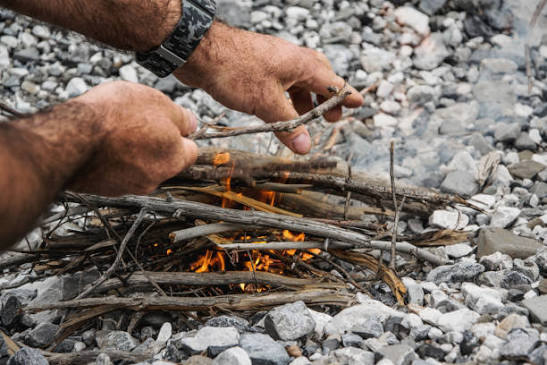
    Making a fire without matches or a lighter is a valuable skill, especially in survival situations. Here are some effective methods to start a fire using natural materials and simple tools:

    1. **Friction-Based Methods**
    – *Bow Drill:* Create a bow with a flexible stick and string, use a spindle (a straight, dry stick) and a fireboard (a flat piece of wood with a notch). Rub the spindle rapidly against the fireboard using the bow to generate heat and create an ember. Transfer the ember to tinder and blow gently to ignite a flame.
    – *Hand Drill:* Similar to the bow drill but using just your hands to spin the spindle against the fireboard. Requires dry, soft woods and patience.

    2. **Spark-Based Methods**
    – *Flint and Steel:* Strike a piece of steel against flint rock to produce sparks. Direct the sparks onto char cloth or dry tinder to start a fire.
    – *Firesteel (Ferrocerium rod):* Scrape the rod with a metal striker to produce hot sparks that ignite tinder.

    3. **Lens-Based Methods**
    – *Magnifying Glass or Lens:* Use sunlight focused through a magnifying glass, eyeglasses, or even a clear plastic bag filled with water to concentrate sunlight onto tinder until it ignites.

    4. **Battery and Steel Wool:**
    – Touch fine steel wool to both terminals of a battery. The steel wool will heat up and ignite. Transfer the flame carefully to tinder.

    **Tips for Success:**
    – Use dry, fine tinder like dry grass, leaves, bark fibers, or cotton.
    – Prepare kindling and fuel wood in advance to keep the fire going once it starts.
    – Practice fire safety and ensure your fire is completely extinguished before leaving the area.

    With patience and the right materials, you can start a fire without matches or a lighter!

  • 16 Great Quotes about Artificial Intelligence

    16 Great Quotes about Artificial Intelligence

    Here are some famous quotes about Artificial Intelligence from notable figures  that capture its promise, challenges, and impact:

    1. “The development of full artificial intelligence could spell the end of the human race.” — Stephen Hawking

    2. “Artificial intelligence is the new electricity.” — Andrew Ng

    3. “The question is not whether intelligent machines can have any emotions, but whether machines can be intelligent without any emotions.” — Marvin Minsky

    4. “Some people call this artificial intelligence, but the reality is this technology will enhance us. So instead of artificial intelligence, I think we’ll augment our intelligence.” — Ginni Rometty

    5. “AI is about replacing human decision making with more sophisticated technologies.” — Dave Waters

    6. “The key to artificial intelligence has always been the representation.” — Jeff Hawkins

    7. “Success in creating effective AI could be the biggest event in the history of our civilization. Unfortunately, it might also be the last.” — Stephen Hawking

    8. “The question of whether a computer can think is no more interesting than the question of whether a submarine can swim.” — Edsger W. Dijkstra

    9. “Artificial intelligence is the future, not only for Russia, but for all humankind. It comes with colossal opportunities, but also threats that are difficult to predict.” — Vladimir Putin

    10. “The real question is, when will we draft an artificial intelligence bill of rights? What will that consist of? And who will get to decide that?” — Gray Scott

    11. “Our intelligence is what makes us human, and AI is an extension of that quality.” — Yann LeCun

    12. “The pace of progress in artificial intelligence is incredibly fast.” — Elon Musk

    13. “By far, the greatest danger of Artificial Intelligence is that people conclude too early that they understand it.” — Eliezer Yudkowsky

    14. “Machines take me by surprise with great frequency.” — Alan Turing

    15. “AI is likely to be either the best or worst thing to happen to humanity.” — Elon Musk

    These quotes offer perspectives from leading thinkers on the transformative power and ethical considerations of AI.

  • Shy and introverted celebrities

    Shy and introverted celebrities

    Here’s a list of celebrities known for their shy or introverted nature, focusing primarily on current public figures:

    – **Billie Eilish** – The singer-songwriter has spoken openly about her introverted personality and preference for privacy.

    – **Ariana Grande** – Often described as introverted and selective about social interactions.

    – **Daniel Radcliffe** – The “Harry Potter” star has shared how he’s naturally introverted and values quiet time.

    – ** Kristen Stewart** – Known for her reserved and introspective demeanor in public.

    – **Keanu Reeves** – Famously low-key and private, often described as shy and humble.

    – **Lady Gaga** – Despite her bold stage persona, she has spoken about her introverted side.

    – **Ryan Gosling** – Recognized for being more reserved and private compared to many of his peers.

    – **Emma Stone** – Has spoken openly about her shyness and social anxiety.

    – **Adele** – Known for being reserved and private outside of her music career.

    – **Maggie Rogers** – The singer-songwriter identifies as an introvert and has discussed how it influences her music.

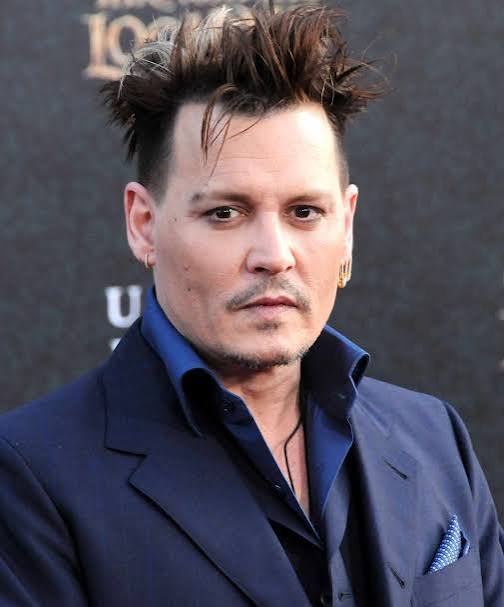
    – **Johnny Depp** – Though very famous, he is often described as shy and introspective offstage.

    – **Jennifer Lawrence** – Has talked about being shy and awkward in social situations.

    – **Robert Pattinson** – Prefers to keep his personal life private and is known for being introspective.

    – **Taylor Swift** – Identifies as introverted and has spoken about needing time alone to recharge.

    -** Lorde**: Identifies as introverted and prefers solitude.

    **Notable Figures from the Past:**

    – **Audrey Hepburn** – Known for her grace and quiet personality off-camera.

    – **Albert Einstein** – Often described as introverted and thoughtful.

    – **J.D. Salinger** – Famous for his reclusive lifestyle.

    – **Billie Holiday** – The legendary jazz singer was known to be introverted and struggled with stage fright.

    – **Emily Dickinson** – The poet lived a very private and introverted life.

    – **Bill Withers**- Known for his quiet and private lifestyle.

    – **Harper Lee**- The author of “To Kill a Mockingbird” was famously private and introverted.

    These celebrities demonstrate that shyness and introversion can coexist with public success and creativity.

  • Ooo, Me, Me!

    What’s a thing you were completely obsessed with as a kid?

    Hey, I’ll answer. Since it turns out that I have an autistic spectrum disorder, yes I developed obsessions, especially as a kid.

    I grew up in 1980s, with it’s several classic science fiction movies that are now a part of pop culture, I developed an obsession with robots and future tech. It got to the point where I wanted to work in the robotics field, most likely as a technician.

    The bad news is that I never worked in that field, although I do have an IT related degree. The good news is I have a robotics hobby, and I sometimes come up with interesting designs.

    I became obsessed with Leonardo Da Vinci as a kid. I know quite a bit about his life, art, and his dabbling in architecture and engineering. That’s something I mostly kept to myself over the years, but I was able to visit the Leonardo Da Vinci Science and Technology Museum in Milan recently.

    I liked some of the 80s music, and even some of the current music I listen to has that 80s influence, or samples music from the 1980s. Michael Jackson, Prince, The Gap Band, Alexander O’Neal, and so on.

    I had a healthy obsession (maybe unhealthy, since it affected my grades) with video games in the 1980s, I had video game consoles over the years, and I would argue that playing video games helped me survive a rough childhood. I since cooled down from playing video games, at least until a Holodeck technology becomes real.

    I had numerous Transformers toys (again robots), and I was obsessed with the supernatural and paranormal. Yes, I read about aliens and UFOs, ghosts, the cryptids like the Loch Ness Monster and Bigfoot. I later became a skeptic and atheist. Funny how that turned out.

    On the bad side, I had an obsession with infectious diseases like Rabies and then HIV. I had a phase where I was washing my hands several times a day because of anxiety of getting sick. I outgrown that phase though.

    I’m happy to say that I don’t have either disease, as far as I know. I suppose I got more educated about viruses because I was afraid of getting sick with such diseases. I never got COVID, and in fact helped in a small way in the creation of the mRNA vaccines.

    So obsessions can be a good thing, if channeled properly.

  • Free from pain and fear, money no obstacle

    If you had to describe your ideal life, what would it look like?

    I think the title is self explantory, but I will elaborate. I wish that I could have an easier life than I do now. I still worry about making ends meet month to month, although I’m more comfortable than I have been before. And I live with a fair amount of anxiety and fear, especially about my health and the future. My ideal life would be to be able to do whatever I wanted (within reason), and I wouldn’t be afraid of the consequences. Like loss, harm, or failure.

    Like before I started my HETTY blog, I had an idea for a certain style of cookbook. It was gonna be postmodern, but I’m afraid of saying more than that vague description. But I have no connections in the publishing industry, there’s already a lot of cookbooks published, and maybe the specific style I wanted to write the cookbook in wouldn’t land with the public, and it would later end up in the bargain bin. So after some thought, early efforts, and worry, I didn’t write anything substantial.

    If I was more secure financially and socially, I would have probably written the cookbook, without the fear of failure. I would be willing to take more risks.

    There’s also been times where I have been too timid to ask certain women out on dates throughout my life. Again, the fear of failure and possibly of harm. Also times where I was afraid of speaking up when it could be required. Cuz I’m sometimes afraid of saying the wrong thing at inappropriate moments. So I clam up more often than not.

    So that ideal life remains a fantasy so far. I still have ideas and aspirations, so maybe I can luck out someday and get to a place where I can take more reasonable risks. But I would like to be free from pain, fear, and be more financially comfortable.

  • I Learned Better Outside of School.

    I Learned Better Outside of School.

    Who was your most influential teacher? Why?

    I struggle to recall the names of any of my prior teachers, and I had many of course. I went to public school, and I can only remember Ms. Lloyd-Jones, my kindergarten teacher. I think I only remember her name because it was hyphenated.

    I admit that I was barely above average as a student, but I learned better outside of school. And I have an unconventional education. Years of public school, a military apprenticeship mostly learning cooking, an associate’s degree in Computer Information Systems (not financially lucrative yet), and I dropped out of getting a bachelor’s degree in Technical Writing, but I only had a year left in getting one.

    I remember Jean-Claude, the French Chef who had a gentle way of teaching military cooks to improve on cooking methods. He was a mentor and supervisor, but I didn’t know him well. He had advice that I still remember.

    But I would say Leonardo (Da Vinci) was my best overall teacher, even though he lived centuries ago. He was more than an artist, from what I read of him. He worked in different fields, and for some reason I find him fascinating. Mainly for his designs of flying machines, anatomy drawing, and mechanical devices. I saw how gears, ropes, frames, and pulleys worked together for a certain purpose.

    I think I’m a dreamer like he was, and it’s only in recent years I’ve been dabbling in different fields like video generation, robotics, AI generated projects, music, experimenting with food recipes, painting, and writing. My blog counts.

    The most influential Leonardo quote I remember? “It’s not enough to know. We must also do.”

    I was able to visit the Leonardo Da Vinci Science and Technology Museum in Milan earlier this month, and I mostly went to take photos and absorb info so I can be inspired to make my own inventions and designs. Yes, I have some ideas I want to work on. Let’s see if I can succeed.

  • HL Mencken: 14 Great Quotes

    HL Mencken: 14 Great Quotes

    Henry Louis Mencken (1880-1956) was one of the greatest journalists, essayists, and cultural cititics of the 20th Century. Here are some of the best quotes by H.L. Mencken, along with their sources:

    1. **”For every complex problem there is an answer that is clear, simple, and wrong.”***Source:* Often attributed to Mencken; appears in various writings but exact origin is uncertain.

    2. **”The most dangerous man to any government is the man who is able to think things out for himself.”***Source:* *The American Mercury*, 1926.

    3. **”Democracy is the theory that the common people know what they want, and deserve to get it good and hard.”***Source:* *Notes on Democracy*, 1926.

    4. **”Puritanism: The haunting fear that someone, somewhere, may be happy.”***Source:* Attributed in various works; exact source uncertain but reflects Mencken’s critiques of morality.

    5. **”No one ever went broke underestimating the intelligence of the American public.”***Source:* *The American Mercury*, 1920s.

    6. **”Nobody ever lost a dollar by underestimating the taste of the American public.”***Source:* Similar in theme to above; from Mencken’s critiques of popular culture.

    7. **”The whole aim of practical politics is to keep the populace alarmed (and hence clamorous to be led to safety) by menacing it with an endless series of hobgoblins, all of them imaginary.”***Source:* *In Defense of Women*, 1918.

    8. **”On some great and glorious day the plain folks of the land will reach their heart’s desire at last, and the White House will be adorned by a downright moron.”***Source:* *The American Mercury*, 1920.

    9. **”The urge to save humanity is almost always a false front for the urge to rule it.”***Source:* From Mencken’s commentary on social movements, particularly in *The American Mercury*.

    10. **”In every man under thirty there is a lawless anarchist, and in every man over thirty there is a conformist coward.”***Source:* From Mencken’s *A Mencken Chrestomathy* (1949).

    11. “An idealist is a person who helps other people to be prosperous.”— Source: From Mencken’s writings on social criticism and human nature.

    12. **”It is the dull man who is always sure, and the sure man who is always dull.”***Source:* From *The American Mercury*, December 1925.

    13. **”The education of a man is never completed until he dies.”***Source:* Paraphrased from Mencken’s writings on education and lifelong learning.

    14. **”Every decent man is ashamed of the government he lives under.”***Source:* From *The American Mercury*, 1925.

    These quotes showcase Mencken’s sharp wit and often cynical view of politics, society, and human nature. For full context, many are found in his essays and articles published primarily in *The American Mercury* magazine during the 1920s.

  • The World Needs Misfits

    What advice would you give to your teenage self?

    Oh, I would have to make a list of the things I would tell my younger self. But I’ll start with changing the mindset about loneliness. Being alone can be an advantage in some ways , and I developed in such a way that I can tolerate isolation better than others. Maybe not try so hard to make friends and date. It will happen in time with less pressure.

    Save money as much as possible. I fell for the materialistic creed, and thought that I would always be fairly comfortable financially. There were definitely lean times in my life, and there may be more in the future. So try to be more frugal.

    Study engineering in university. I wouldn’t say that I have a talent in engineering, more like a general interest that could have developed further with formal schooling. Maybe I could have worked as in robotics, materials science, or even in artificial intelligence. There’s more opportunities for engineers than the other fields I studied.

    Don’t smoke or toke, no matter how stressed or upset you get. I developed bad habits in my late teens and twenties, mainly cuz I don’t cope with stress well. I didn’t know that those habits would cause more stress and difficulty over time, plus I would be able to save money if I didn’t develop those habits. I didn’t fully understand how a mind could be addicted to substances.

    Read more science and philosophy. I read a lot, but the stuff I was reading as a teenager is different than what I read now. I would recommend Bertrand Russell, Arthur Schopenhaur, Albert Camus, and maybe some other ones, since their works would help me understand the world better, and help me cope with problems I would have throughout my life. I could have developed a different mentality.

    Walk more, and be more creative. I still love music, but I can barely play. I could have developed my music skill more, maybe using studio software. And walking and biking seem to exercise that I can tolerate. Paint, draw, and write, maybe some opportunities would come up.

  • The Curse of being Atypical.

    What bores you?

    So, what bores me? It’s more like what doesn’t bore me. I have been more selective of how I spend my free time.

    Formal education bores me. I went to school for several years, including a technical college and university. Going to lectures, listening to 2 or 3 professors or teaching assistants per day lecture for hours at a time, sometimes reading about subjects that can be tedious. It often took an innovative or charismatic teacher for me to pay attention in class, or I took a course that I have familiarity and interest in.

    Sports bore me. While some people find athletic teams and individuals fascinating, I often don’t. It’s more like I count how many sport injuries can happen during a game or match.

    Many television shows and oftentimes movies can bore me. Television comedies seem to be my go-to, but it has to be very funny for me to keep sustained interest.

    While I used to like movies, I think I saw so many over decades that I can predict plot twists and movie tropes. I maybe see one or 2 movies a year now, and they tend to be the blockbuster type of film. I was bored seeing the second Avatar movie, it was so long.

    I read everyday, but I find books boring now. I don’t think I have the attention span to read novels, but I will read the occasional non-fiction book. I may not finish though, but I will read up on summaries and profound quotes after. And certain articles are Too Long; Didn’t Read, so I’ll skip to the last 2 paragraphs.

    I tended to job hop after 18 months-2 years in most cases, cuz I would grow bored with the routine over time. I would get excited at first once I got a job, I would then learn the routines, and over time have contempt over the routine. And often the pay wasn’t good enough for me to tolerate the stress and boredom and stay longer.

    What else? Some music genres can be uninteresting for me, like Country music, Folk, Jazz. While I was a fan of the early days of Rap and HipHop, it seems like even the modern artists these days are going through the motions.

    I partly left the US cuz I found my newer residence boring. When shopping and eating are the main pastimes there, I was ready to move after 5 years. Nice weather though.

    Maybe it’s me. I lived too long, had my fill of experiences, and became burnt out and world weary. It’s harder to find interesting things about living on Earth. I will probably dabble more in virtual reality in the near future, if I can afford it. Longing for the Holo-Deck, or Death. Whichever comes first….

  • The Oldest People in History: Lifespans, Stories, and Remarkable Biographies

    The Oldest People in History: Lifespans, Stories, and Remarkable Biographies

    Throughout history, tales of extraordinary longevity have fascinated and inspired us, offering glimpses into lives that have spanned well beyond the ordinary. The oldest people in history not only defied the limits of human lifespan but also witnessed incredible changes across centuries, their stories rich with resilience, wisdom, and remarkable experiences.

    In this blog post, we will explore the lifespans, captivating stories, and unique biographies of some of the most long-lived individuals in history, uncovering the secrets behind their longevity and the legacy they left behind. Whether driven by genetics, lifestyle, or sheer luck, these remarkable lives remind us of the extraordinary possibilities of the human journey.

    1. Introduction: Exploring the Lives of the Oldest People in History

    Throughout human history, stories of extraordinary longevity have fascinated and inspired us. From ancient legends to well-documented cases, the lives of the oldest people offer a unique window into the possibilities of human lifespan, resilience, and the secrets to aging gracefully. In this post, we’ll explore some of the most remarkable biographies of individuals who have defied the odds, living well beyond a century. We’ll delve into their lifespans, the historical contexts they lived through, and the personal stories that shaped their long journeys.

    Whether it’s Jeanne Calment, who holds the record for the longest confirmed human lifespan, or lesser-known centenarians whose lives touched communities and cultures around the world, these stories provide not only intriguing facts but also valuable lessons on health, longevity, and the human spirit. Join us as we embark on a fascinating exploration of the oldest people in history.

    2. Understanding Human Longevity: Biological and Environmental Factors

    Human longevity is a complex interplay of biological and environmental factors that together shape the potential lifespan of an individual. Biologically, genetics play a crucial role- certain gene variants have been linked to longer lifespans and a lower risk of age-related diseases.

    For example, some individuals possess genetic traits that enhance cellular repair mechanisms or improve metabolic efficiency, contributing to healthier, longer lives.

    However, genetics alone do not determine lifespan; environmental influences are equally significant. Access to nutritious food, clean water, quality healthcare, and safe living conditions all contribute to overall health and longevity.

    Additionally, lifestyle choices such as regular physical activity, stress management, and avoiding harmful habits like smoking dramatically impact how long and how well a person lives. Social connections and mental well-being also play vital roles, as studies have shown that strong relationships and a positive outlook can improve lifespan.

    By understanding how these biological and environmental factors intertwine, we gain valuable insights into the remarkable stories of the oldest people in history and the keys to unlocking a longer, healthier life.

    3. Jeanne Calment: The Longest Verified Lifespan

    Jeanne Calment holds the record for the longest verified human lifespan, living an astonishing 122 years and 164 days.

    Born in Arles, France, in 1875, Jeanne witnessed an incredible span of history- from the invention of the telephone to the dawn of the internet age. Her longevity has fascinated scientists and historians alike, offering valuable insights into aging and human resilience.

    Jeanne attributed her long life to a combination of factors, including a diet rich in olive oil, a calm and optimistic outlook, and a lifestyle that included regular physical activity such as cycling and fencing in her youth. She was known for her sharp wit and sense of humor well into her later years, often joking about her age and the secret to her longevity.

    Her remarkable biography not only highlights the extremes of human lifespan but also serves as an inspiring testament to the possibilities of longevity. Jeanne Calment’s life story continues to captivate researchers and the public, reminding us of the extraordinary potential of the human spirit across more than a century.

    4. The Story of Jiroemon Kimura: Japan’s Centenarian Legend

    Jiroemon Kimura’s story is nothing short of extraordinary- a testament to longevity, resilience, and the quiet strength of the human spirit.

    Born on April 19, 1897, in Kyotango, Japan, Kimura lived through three centuries, witnessing profound changes in the world around him. He held the Guinness World Record as the oldest verified man in history, celebrating his 116th birthday in 2013 before passing away later that year at the remarkable age of 116 years and 54 days.

    What makes Kimura’s life particularly inspiring is not just the length of his years but the quality and simplicity with which he lived them. A postman by profession, he credited his long life to a combination of hard work, a balanced diet, and a positive outlook. He maintained a routine that included early mornings and modest meals, often emphasizing the importance of eating light and staying mentally active.

    Kimura’s longevity also reflects the broader cultural and genetic factors associated with Japan’s famously long-lived population. His story has been celebrated worldwide, inspiring researchers and individuals alike to explore the secrets of healthy aging.

    More than just a record-holder, Jiroemon Kimura remains a symbol of endurance and the incredible potential of the human lifespan.

    5. Sarah Knauss: America’s Oldest Recorded Person

    Sarah Knauss holds the remarkable title of America’s oldest recorded person, having lived an extraordinary 119 years and 97 days.

    Born in 1880 in Hollywood, Pennsylvania, Sarah witnessed an incredible span of history- from the invention of the telephone to the dawn of the internet age. Her longevity has fascinated researchers and admirers alike, not only because of her age but also due to her calm and cheerful disposition throughout her life.

    Known for her gentle nature and positive outlook, Sarah lived a relatively quiet life. She attributed her long life to staying calm, avoiding stress, and maintaining a peaceful mindset. Even in her later years, Sarah remained mentally sharp and was said to have a good memory and clear speech. Her family often remarked on her resilience and ability to adapt to changing times, which may have contributed to her incredible lifespan.Sarah’s story is a testament to the power of a balanced lifestyle, strong family support, and a positive attitude.

    Her life continues to inspire those who seek to understand the secrets behind human longevity, and her legacy remains a significant chapter in the history of supercentenarians.

    6. Historical Figures with Remarkable Longevity

    Throughout history, several figures have stood out not only for their achievements but also for their extraordinary lifespans, defying the odds of their time. One notable example is Li Ching-Yuen, a Chinese herbalist and martial artist who, according to some accounts, lived for over 197 years.

    While the accuracy of this claim is debated, Li’s story has become legendary, symbolizing the potential benefits of traditional Chinese medicine and a balanced lifestyle.

    In addition to these individuals, there are various other historical figures whose longevity has intrigued researchers and historians alike. Their stories often intertwine with cultural practices, diets, and philosophies that emphasize harmony with nature and mental well-being. Exploring these biographies provides valuable insight into how longevity was perceived and pursued in different eras and cultures, offering inspiration and lessons that remain relevant today.

    7. Common Traits and Habits Among the Oldest People

    While each of the world’s oldest individuals has a unique story, researchers and biographers have identified several common traits and habits that seem to contribute to their extraordinary longevity. Many of these centenarians share a balanced approach to life, combining physical activity, a nutritious diet, and strong social connections.

    One recurring habit is maintaining an active lifestyle. Whether it’s gardening, walking, or engaging in light exercise, keeping the body moving appears to support both physical health and mental sharpness well into old age.

    Additionally, many of the longest-lived people consume diets rich in whole, natural foods, often emphasizing fruits, vegetables, lean proteins, and healthy fats-while avoiding excessive processed foods and sugars.

    Social engagement also plays a critical role. Longevity often goes hand in hand with maintaining strong relationships with family and community, fostering a sense of belonging and purpose. Many centenarians attribute their long lives to staying mentally active through hobbies, reading, or lifelong learning, which helps sustain cognitive function and emotional well-being.

    Lastly, a positive outlook on life, resilience in the face of adversity, and a capacity to manage stress effectively have been noted as key psychological traits among the oldest people. While genetics certainly influence lifespan, these common lifestyle habits and mindsets offer valuable insights into how longevity can be nurtured.

    8. The Role of Genetics in Extreme Lifespans

    Genetics plays a significant role in determining lifespan, especially when it comes to those exceptional individuals who live well beyond the average human age. Studies of centenarians and supercentenarians- people who live to 100 years and beyond- have revealed that certain genetic factors contribute to longevity. These individuals often possess unique genetic variations that enhance their cells’ ability to repair damage, reduce inflammation, and maintain metabolic health.

    For example, genes involved in DNA repair mechanisms, immune system function, and cellular resilience are frequently found to be more active or efficient in those with extreme lifespans.However, genetics is only part of the story. While having a favorable genetic makeup can provide a strong foundation for a long life, environmental factors, lifestyle choices, and social connections also play crucial roles.

    Researchers continue to study families with a history of exceptional longevity to better understand how these genetic traits are passed down and how they interact with other factors to promote a longer, healthier life.

    Ultimately, the role of genetics in extreme lifespans highlights the complex interplay between our inherited blueprint and the lives we lead, offering hope and insight into the secrets behind living a remarkably long life.

    9. Cultural Perspectives on Aging and Longevity

    Aging and longevity have been perceived differently across cultures throughout history, shaping how societies honor their elders and understand the process of growing old. In many traditional cultures, elders are revered as the keepers of wisdom, history, and spiritual guidance.

    For example, in many Indigenous communities around the world, the elderly hold a respected status, often serving as storytellers and advisors who maintain the continuity of cultural knowledge and values.

    In contrast, some modern Western societies tend to emphasize youthfulness, sometimes marginalizing older adults.

    However, growing awareness of the value of aging has led to increased interest in celebrating longevity and learning from those who have lived extraordinary lives.

    Cultural practices such as Japan’s celebration of “Respect for the Aged Day” highlight the deep appreciation for seniors and their contributions to society.

    Furthermore, differing diets, lifestyles, social structures, and attitudes toward aging in various cultures have been linked to remarkable lifespans.

    The Blue Zones regions where people commonly live past 100 offer valuable insights into how cultural habits like strong family ties, active lifestyles, and plant-based diets contribute to longevity.Understanding these cultural perspectives enriches our appreciation of the oldest people in history, reminding us that longevity is not only a biological phenomenon but also deeply intertwined with social values and traditions.

    10. Medical Advances and Their Impact on Lifespan

    Medical advances have played a pivotal role in extending human lifespans throughout history. From the discovery of vaccines to the development of antibiotics, these breakthroughs have drastically reduced mortality rates from infectious diseases that once claimed millions of lives.

    For example, the introduction of the smallpox vaccine in the late 18th century marked a turning point in public health, eventually leading to the eradication of the disease.

    In more recent times, innovations such as improved surgical techniques, advanced diagnostic tools, and personalized medicine have further enhanced our ability to treat chronic illnesses and manage age-related conditions.

    The rise of preventative care and health education has empowered individuals to make lifestyle choices that promote longevity.

    Additionally, ongoing research into genetics and regenerative medicine holds promise for even greater extensions of human lifespan in the future.These medical advances not only contribute to longer lives but also improve the quality of life in our later years, enabling many of the oldest people in history to live vibrant, active lives well beyond what was previously considered possible.

    Understanding the impact of these developments helps us appreciate the remarkable biographies of those who have achieved extraordinary longevity.

    11. Longevity Myths and Misconceptions

    Longevity has fascinated humanity for centuries, often giving rise to a variety of myths and misconceptions about what it takes to live an exceptionally long life.

    One common myth is that certain foods or secret potions can dramatically extend lifespan. While a balanced diet and healthy lifestyle certainly contribute to overall well-being, there is no miracle food or elixir that guarantees longevity.

    Another misconception is that living past 100 is purely a matter of genetics. Though genetics do play a role, environmental factors, lifestyle choices, and access to healthcare are equally important in determining how long someone lives.

    Some stories of extreme age, such as claims of people living beyond 120 or even 150 years, have been debunked due to lack of reliable documentation or errors in record-keeping. In many cases, these tales stem from misunderstandings or exaggerations passed down through generations.

    It’s important to approach such claims with a critical eye and rely on verified records when studying the lives of the oldest individuals in history. Understanding these myths helps us appreciate the true complexity behind longevity and underscores the importance of scientific research and verified data in uncovering the secrets behind long, healthy lives.

    12. Lessons Learned from the Lives of Centenarians

    The lives of centenarians offer us invaluable lessons about longevity, resilience, and the human spirit. Many of these remarkable individuals share common traits that contribute not only to their impressive lifespans but also to the quality of their years. One key takeaway is the importance of maintaining strong social connections- centenarians often emphasize the role of family, friends, and community in keeping their spirits high and minds active.

    Additionally, many have led balanced lifestyles, incorporating regular physical activity, a nutritious diet, and adequate rest into their daily routines. Perhaps most inspiring is their positive outlook on life; a sense of purpose, adaptability, and the ability to find joy in small moments seem to be recurring themes. By reflecting on these lessons, we can gain insights into how to cultivate habits and mindsets that promote not only a longer life but a richer, more fulfilling one.

    13. How to Promote Healthy Aging in Your Own Life

    Promoting healthy aging is a vital step toward not only extending your lifespan but also enhancing the quality of your years. While genetics play a role in longevity, lifestyle choices have a profound impact on how gracefully we age.

    To foster healthy aging, focus on a balanced diet rich in fruits, vegetables, whole grains, and lean proteins, which provide essential nutrients that support cellular repair and reduce inflammation.

    Regular physical activity- whether it’s walking, swimming, or yoga- helps maintain muscle mass, flexibility, and cardiovascular health, all crucial for staying independent as you grow older.

    Equally important is nurturing your mental and emotional well-being. Engaging in social activities, pursuing hobbies, and practicing mindfulness or meditation can reduce stress and keep your mind sharp.

    Prioritizing quality sleep helps repair the body and supports cognitive function. Additionally, routine health check-ups enable early detection and management of chronic conditions.

    By embracing these habits, you not only improve your chances of living a longer life but also increase the likelihood that those extra years will be filled with vitality, purpose, and joy- just like many of the remarkable individuals featured throughout history.

    14. The Future of Human Longevity: What Science Predicts

    As science and technology continue to advance at an unprecedented pace, the future of human longevity is becoming an increasingly exciting and tangible prospect. Researchers are exploring groundbreaking fields such as genetic engineering, regenerative medicine, and advanced biotechnology with the goal of not just extending lifespan, but also improving the quality of those added years.

    Innovations like CRISPR gene editing hold the promise of correcting genetic mutations that contribute to aging and age-related diseases, while stem cell therapies aim to repair and rejuvenate damaged tissues throughout the body.

    Moreover, the study of cellular senescence- the process by which cells lose the ability to divide and function properly- is revealing new targets for interventions that could slow down or even reverse aspects of the aging process.

    Scientists are also investigating the role of lifestyle factors, such as diet, exercise, and microbiome health, in promoting longevity, emphasizing a holistic approach to aging well.While it remains uncertain exactly how far human lifespan can be extended, many experts predict that in the coming decades, breakthroughs in anti-aging therapies and personalized medicine could enable people to live significantly longer, healthier lives.

    This potential future not only raises fascinating scientific possibilities but also invites important ethical and social discussions about how extended lifespans might reshape society.

    As we continue to unravel the mysteries of aging, one thing is clear: the story of human longevity is far from over.

    15. Conclusion: Celebrating Remarkable Biographies and Lifespans

    Throughout history, the stories of the oldest people have captivated our imagination and inspired us to reflect on the possibilities of human longevity. These remarkable individuals not only reached extraordinary ages but also lived through incredible eras of change, witnessing firsthand the evolution of societies, technologies, and cultures.

    Their biographies offer more than just numbers- they provide a window into resilience, adaptability, and the human spirit’s capacity to endure. As we celebrate their lifespans, we honor their unique journeys, the lessons they impart, and the hope they give us for our own lives.

    In exploring these remarkable lives, we are reminded that longevity is not just about the years counted, but about the stories lived and the legacies left behind.

    Exploring the lives of the oldest people in history offers us a fascinating glimpse into the resilience, wisdom, and extraordinary experiences that come with a long life. Their stories remind us not only of the incredible potential of human longevity but also of the rich histories and lessons passed down through generations.

    Whether through their remarkable lifespans or the inspiring chapters of their biographies, these individuals continue to motivate us to cherish every moment and embrace the journey of life. We hope this deep dive into their lives has sparked your curiosity and appreciation for the remarkable tales that time can hold. ~H

  • 13 of the World’s Greatest Thinkers

    13 of the World’s Greatest Thinkers

    Throughout world history, numerous intellectuals have profoundly shaped human thought, culture, and progress.

    Here’s a list of some of the greatest intellectuals whose ideas and discoveries continue to influence us today:

    – **Socrates (470–399 BCE)** — The classical Greek philosopher who laid the groundwork for Western philosophy through his method of questioning and dialogue.

    – **Plato (427–347 BCE)** — A student of Socrates, Plato founded the Academy and contributed foundational ideas in philosophy, politics, and metaphysics.

    – **Aristotle (384–322 BCE)** — A polymath who made lasting contributions to logic, science, ethics, and political theory.

    – **Leonardo da Vinci (1452–1519)** — The quintessential Renaissance man, da Vinci excelled as an artist, scientist, engineer, and inventor.

    – **Confucius (551–479 BCE):** Chinese philosopher whose teachings on morality, society, and governance deeply influenced East Asian cultures.

    – **Isaac Newton (1643–1727)** — His laws of motion and universal gravitation became cornerstones of physics and scientific inquiry.

    – **Immanuel Kant (1724–1804)** — A central figure in modern philosophy, known for his work on epistemology, ethics, and metaphysics.

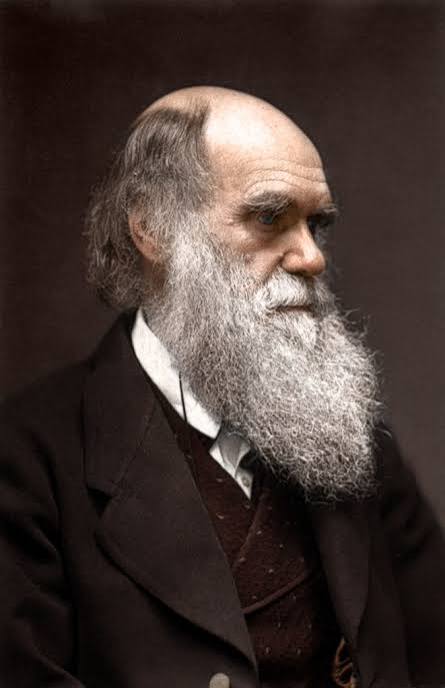
    – **Charles Darwin (1809–1882)** — Revolutionized biology with his theory of evolution by natural selection.

    – **Marie Curie (1867–1934)** — Pioneering physicist and chemist, the first woman to win a Nobel Prize, known for her work on radioactivity.

    – **Albert Einstein (1879–1955)** — His theories of relativity transformed our understanding of space, time, and energy.

    – **Noam Chomsky (b. 1928)** — A linguist, philosopher, and political activist recognized for his groundbreaking work in linguistics and cognitive science.

    – **Sigmund Freud (1856–1939):** Founder of psychoanalysis, offering new insights into the human mind and behavior.

    – **Jane Austen (1775–1817):** Novelist whose keen observations of social structures and human nature have resonated across centuries.

    This list is by no means exhaustive, but each of these intellectuals has played a critical role in expanding the horizons of human knowledge and shaping the intellectual landscape of their times and beyond. ~H

  • Get a DNA test done.

    Something on your “to-do list” that never gets done.

    I’m curious about my genetic history, including my full ethnic background going back hundreds or even thousands of years , and my genetic propensity for certain diseases and conditions that may happen in the future. So I would in time like to get a DNA test done. I keep on putting it off.

    I already participated in 2 genetic studies that use genetic samples I’ve given- SPARK and the Million Veteran Program- because I’m an US veteran with an Autistm Spectrum Disorder. Unfortunately, the results of my donated DNA aren’t available to me, since it’s confidential information. But I would l like to do a private DNA test.

    So why haven’t I done a DNA test yet? It’s always a money problem. I never seem to have enough money to pay for a DNA test. And as I understand, 23 & Me is one of few private companies that offer analysis of DNA samples, but it recently had financial woes.

    Getting a DNA test done is more of a want than a need. One of these days, I’ll get a test done. I hope so.