Tag: Commentary

  • I’m already writing for free!

    What job would you do for free?

    It’s true. I’m trying to monetize my WordPress blog, which I started in October 2025. I planned on relying on donations for my writing, which mostly focuses on poverty relief. How much have I made so far for the articles I posted? Zero!

    I’ll admit that I used AI generated content for some of the articles I posted. I just wrote the prompts, edited the generated content as needed, and copy and pasted the articles to my blog space. But some articles I wrote myself.

    I’m in fact losing some money from paying for Blaze advertising at times, paying for the WordPress domain, and then paid for the AI writing app. I also at times spend money to make certain recipes or go to events, and then write about them later.

    I also admit that I have the financial means to support myself now so I can write about different subjects. But my experience so far with blog writing has been discouraging, if I focus more on earning a living from writing.

    I recently read a social media post about someone else who tried and failed to make money online. It can be very hard, almost impossible if someone can’t invest massively in advertising or a lucrative service and/or product.

    Anyways, as far as jobs I would do for free that exist in real life, that are worth the stress and investment of time and effort? Not many. Maybe a club DJ, an astronaut, or a male porn star. The fringe benefits have to be worth it. Which of those 3 are more likely to happen in my lifetime though?

  • I’ll take the more affordable option

    I’ll take the more affordable option

    You’re going on a cross-country trip. Airplane, train, bus, car, or bike?

    I have experience with all forms of the listed transportation, but it depends on the country I’m in.

    The US unfortunately doesn’t have a good train network compared to Europe, but if it’s more affordable and accessible to take the train, I’ll do it. I will take flights to different cities if there are no train routes there.

    Buses I will take only for shorter distances, say no more than 100 miles one way. I once took a longer round trip from Little Rock to Chicago by bus, and I found the experience unpleasant. Every single bus there and back was late, sometimes by over an hour. The rest stops were too brief, and sometimes the buses would be stuck in traffic congestion. I got too stressed, so no more of that.

    A round trip by Amtrak from Little Rock to Milwaukee was more of a pleasant experience. I’d recommend trips by train whenever possible, even though it can take almost a day to travel one way.

    If I’m not rushed to go to a specific city or destination, I’ll take the scenic route by train. A flight otherwise, and then a bus is my last option. Bikes and cars only for shorter trips of no more than 5 miles, if I can help it.

  • HL Mencken: 14 Great Quotes

    HL Mencken: 14 Great Quotes

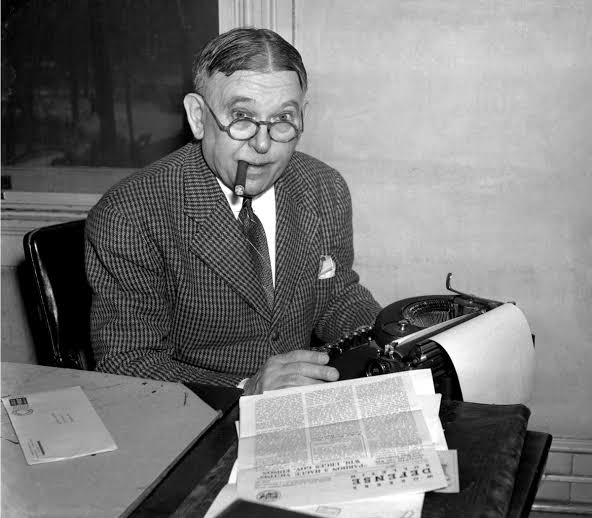
    Henry Louis Mencken (1880-1956) was one of the greatest journalists, essayists, and cultural cititics of the 20th Century. Here are some of the best quotes by H.L. Mencken, along with their sources:

    1. **”For every complex problem there is an answer that is clear, simple, and wrong.”***Source:* Often attributed to Mencken; appears in various writings but exact origin is uncertain.

    2. **”The most dangerous man to any government is the man who is able to think things out for himself.”***Source:* *The American Mercury*, 1926.

    3. **”Democracy is the theory that the common people know what they want, and deserve to get it good and hard.”***Source:* *Notes on Democracy*, 1926.

    4. **”Puritanism: The haunting fear that someone, somewhere, may be happy.”***Source:* Attributed in various works; exact source uncertain but reflects Mencken’s critiques of morality.

    5. **”No one ever went broke underestimating the intelligence of the American public.”***Source:* *The American Mercury*, 1920s.

    6. **”Nobody ever lost a dollar by underestimating the taste of the American public.”***Source:* Similar in theme to above; from Mencken’s critiques of popular culture.

    7. **”The whole aim of practical politics is to keep the populace alarmed (and hence clamorous to be led to safety) by menacing it with an endless series of hobgoblins, all of them imaginary.”***Source:* *In Defense of Women*, 1918.

    8. **”On some great and glorious day the plain folks of the land will reach their heart’s desire at last, and the White House will be adorned by a downright moron.”***Source:* *The American Mercury*, 1920.

    9. **”The urge to save humanity is almost always a false front for the urge to rule it.”***Source:* From Mencken’s commentary on social movements, particularly in *The American Mercury*.

    10. **”In every man under thirty there is a lawless anarchist, and in every man over thirty there is a conformist coward.”***Source:* From Mencken’s *A Mencken Chrestomathy* (1949).

    11. “An idealist is a person who helps other people to be prosperous.”— Source: From Mencken’s writings on social criticism and human nature.

    12. **”It is the dull man who is always sure, and the sure man who is always dull.”***Source:* From *The American Mercury*, December 1925.

    13. **”The education of a man is never completed until he dies.”***Source:* Paraphrased from Mencken’s writings on education and lifelong learning.

    14. **”Every decent man is ashamed of the government he lives under.”***Source:* From *The American Mercury*, 1925.

    These quotes showcase Mencken’s sharp wit and often cynical view of politics, society, and human nature. For full context, many are found in his essays and articles published primarily in *The American Mercury* magazine during the 1920s.

  • Costco is the Answer

    Where would you go on a shopping spree?

    I would spree shop at Costco, or any similar store in other countries. I could afford to pay the annual membership, and I’d get more value for my money. I agree more with Costco’s business practices than I do with Walmart/Sam’s Club. I currently don’t have a membership with Costco or any other big bulk store. I’d buy in bulk several products, including some new electronics.

    Fun fact: I had an encounter with the then Costco CEO James Sinegal years ago. I was working as a temp worker at a newly opened Costco, serving refreshments with other temp workers, and he greeted the temp workers at the serving tables. I recognized him before from a segment on 60 Minutes news show, and he seemed to be a pleasant enough man. American companies could learn from his way of doing business.

    It seemed that Sinegal retired soon after that Grand Opening of the Costco, but he’s still alive.

    Costco is the easy answer, Sam’s Club my second choice.

  • “Do you have any money you could give me/us?”

    What is one question you hate to be asked? Explain.

    There’s variations of this question, but it’s a common one that happens the most often that irks me. Homeless or needy people asking me for any help I can offer. Advertising, political ads, and fundraisers asking me for buy or give. Sometimes friends or family will ask me to help them out. There’s various other examples.

    I have a limited income, and while it’s enough to support myself, I have to go without certain indulgences. I try to be frugal and yet I can be generous at times

    The problem is, while I can be generous and have a history of volunteering, there’s limits to my generosity. Like, I can give 2$ to a panhandler at times, but I can’t give the person 20$ or more. At least not too often. I definitely can’t buy the person a new home or even a hotel room for the night. And I can’t afford to give 2$ to 20 or more panhandlers in a day. That has happened before when I’m in cities.

    Another example. There is an annual pledge drive from a famous website that I and millions of others use and appreciate. I have donated smaller amounts at times, but I can’t afford to do larger donations every year. I also can’t afford to give to various fundraisers, only maybe one or 2 per year. There’s times when my bank account is close to going negative.

    I have a hard time saying “no”. There’s often a social pressure to say yes and give money to help others, buy certain products or services, or donate to different causes or political parties and candidates. I try to use my own judgement. I buy, donate, or give when I can afford it, but I can’t always afford it.

    So I end up feeling a lament that my generosity isn’t enough, or my income is too meager to make a big difference in someone’s life with my income, buy a more expensive product/service, or to support a cause I wish that I could. I buy/donate/give to a certain point, but if I go over that limit, I go into survival mode and start saying no or declining more often.

    So there’s a struggle in me between altruism and selfishness. It’s partly why keep to myself much of the time, or I have to cut people off if I’m asked to give more.

    The main reason I struggle with my generosity is, if I ever need financial help, I too often can’t find it. I’m lucky to have the income I have now, cuz I know there’s people living with much less.

  • Legal Corporate Personhood

    If you had the power to change one law, what would it be and why?

    Ok, this is a thinker, and I had to research this some. I’m not a lawyer or work in law, so I hope that this makes sense.

    I would change the concept of Legal or Juridical Personhood. It is a legal concept that’s the foundation of a number of laws in different countries, including the 14th Amendment in the US. By law, corporations, non government organizations, colleges, hospitals, churches, and really any non human entity like rivers can be granted Personhood if it has certain qualities like paying taxes and owning property. It’s a concept that seems to exist in business, government, and the judiciary.

    It’s by law a fictional type of person. But this concept has powers that real persons do not, like surviving the deaths of owners and corporate members, and since many of these corporations ( not all) focus on profit and property, they often have more resources than real working people do. So they do have more power and resources than the ordinary person does.

    They can hire lobbyists to influence government, invest more in political ads on different media, donate to candidates in their favor , have the resources to hire top lawyers, own much more property than the average person, have better access to bank loans and political deals, and sometimes be a monopoly in a certain business.

    It just seems unfair to have the needs of fictional abstract “persons” to often take priority over real persons. So I would change that part of the law. Corporations are organizations with certain mechanisms that help with a goal, like making profit, or accomplishing a mission like healthcare. They are the legal equivalent of a bot. ~H

  • Oh, the dream!

    What would you do if you won the lottery?

    Understand, I don’t play the lottery or gamble all that much. I know that the odds of winning a good sum of money from the lottery are really bad, and I maybe gamble once or twice a year at a casino, and it’s been small amounts that I can part with.

    I know that I can get out of control with gambling, but I think over time, I’m out 200$ between my lifetime winnings and losses. The most I ever won was over 400$ in Las Vegas, and I bowed out and paid bills soon after.

    However, if I did win a jackpot or even 100,000$, I would pay off any debt, give gifts to my family and friends. Maybe 2000$-$5000 each, depending on the winning amount. I would donate to some charities and the underdog political party of my choice, and then buy a ticket to The Netherlands or a Caribbean region country, get an investment visa, and try to live a comfortable and peaceful middle class lifestyle for the rest of my life. Invest and save a sum if I have any money left over. Of course, pay any necessary taxes.

    Of course I’d buy stuff, and I have my eye on some pricy items. No house or car though.

    Oh, and if I ever did ever win the big jackpot, I’m choosing the installment pay option. I don’t want to get too stupid with a large amount of money.

    And the dream bubble popped! Back to a humble existence. ~H

  • 17 Bertrand Russell Quotes

    17 Bertrand Russell Quotes

    Here are some of the best and most thought-provoking quotes by the philosopher and mathematician Bertrand Russell:

    1. “The whole problem with the world is that fools and fanatics are always so certain of themselves, and wiser people so full of doubts.”

    2. “To fear love is to fear life, and those who fear life are already three parts dead.”

    3. “The good life is one inspired by love and guided by knowledge.”

    4. “Do not fear to be eccentric in opinion, for every opinion now accepted was once eccentric.”

    5. “War does not determine who is right — only who is left.”

    6. “The secret of happiness is this: let your interests be as wide as possible, and let your reactions to the things and persons that interest you be as far as possible friendly rather than hostile.”

    7. “Science is what you know, philosophy is what you don’t know.”

    9. “Education is what remains after one has forgotten what one has learned in school.”

    10. “The time you enjoy wasting is not wasted time.”

    11. “Men are born ignorant, not stupid; they are made stupid by education.”

    12. “The secret to happiness is to face the fact that the world is horrible.”

    13. “No one gossips about other people’s secret virtues.”

    14. “The only thing that will redeem mankind is cooperation.”

    15. “To conquer fear is the beginning of wisdom.”

    16. “Religion is something left over from the infancy of our intelligence, it will fade away as we adopt reason and science as our guidelines.”

    17. “One is often told that it is a very wrong thing to attack religion, because religion makes men virtuous. So I am told; I have not noticed it.”

  • How People Survived Fascism

    Survivors of fascism have endured profound and often harrowing experiences under regimes characterized by authoritarian control, suppression of dissent, and widespread human rights abuses. Their stories reveal the devastating impact of fascist rule on individuals and communities, as well as the resilience and courage required to endure and resist.

    Many survivors recount living in constant fear due to pervasive surveillance, arbitrary arrests, and brutal punishments for any perceived opposition.

    Families were frequently torn apart, with loved ones imprisoned, exiled, or worse.

    Daily life under fascism often involved restrictions on freedom of speech, assembly, and press, making it dangerous to express any dissenting opinions.

    Experiences also include witnessing or surviving targeted violence against marginalized groups, including ethnic minorities, political opponents, and other vulnerable populations.

    Forced labor, internment in concentration camps, and systematic persecution were tragically common.

    Despite these hardships, survivors’ testimonies often highlight acts of solidarity, resistance, and hope. Many participated in underground movements, helped hide those persecuted, or found ways to maintain their dignity and humanity in the face of oppression.

    These firsthand accounts are invaluable for understanding the human cost of fascism and serve as powerful reminders of the importance of vigilance against tyranny and the defense of democratic values.

    Organizations and memorial projects around the world work to preserve these stories, ensuring that the lessons of the past inform our present and future.

  • Fascist Regimes in History

    Fascism is a political ideology characterized by authoritarianism, nationalism, and often a dictatorial leadership. Throughout history, several regimes have been identified as fascist or exhibiting fascist characteristics.

    Here are some of the most well-known fascist regimes:

    – **Italy under Benito Mussolini (1922–1943):** Often considered the original fascist regime, Mussolini’s government emphasized nationalism, militarism, and the suppression of political opposition.

    – **Germany under Adolf Hitler (Nazi Party) (1933–1945):** The Nazi regime combined fascist ideology with extreme racism and anti-Semitism, leading to World War II and the Holocaust.

    – **Spain under Francisco Franco (1939–1975):** While Franco’s regime is sometimes described as authoritarian or nationalist, it shared many characteristics with fascism, including centralized control and suppression of dissent.

    – **Portugal under António de Oliveira Salazar (Estado Novo) (1932–1968):** Salazar’s regime was authoritarian and nationalist with some fascist elements, emphasizing traditional values and anti-communism.

    – **Hungary under Miklós Horthy and the Arrow Cross Party (early 1920s–1945):** Horthy’s regime leaned authoritarian, and the later Arrow Cross Party (1944–1945) was explicitly fascist and aligned with Nazi Germany.

    – **Romania under Ion Antonescu (1940–1944):** A military dictator who allied with Nazi Germany and led a government with fascist policies.

    – **Japan (1930s–1945):** While Japan’s government was militaristic and authoritarian during this period, it didn’t fully adopt Western-style fascism but shared similarities in nationalism and expansionism.

    These regimes varied in their specific policies and implementations but shared core elements of fascism such as authoritarian rule, nationalism, and the suppression of opposition.

    It’s important to note that the term “fascism” can be complex and interpretations vary among historians. Some regimes exhibit fascist traits without fully fitting the definition. Each regime had unique features shaped by their own historical and cultural contexts. ~H